Accredited Engineering Programs

Photo by Markus Spiske on Pexels.com

When high school students are looking at applying to engineering in Canada they might run across something stating that the institution’s program is “accredited”. In fact, online there is a whole list of Accredited Engineering Programs in Canada that you can consult if the institution website is not clear about this. All engineering programs at Waterloo are accredited. But what does this mean, and why does it matter?

“Accredited” simply means that the program has been reviewed on a regular basis by the Canadian Engineering Accreditation Board (CEAB, part of Engineers Canada) and that it meets or exceeds certain minimum educational standards. A future post will go into more depth on these standards, since they’re a bit complicated. Suffice to say for now that the standards include what is taught, how it’s taught, who does the teaching, how good the facilities are, and various other aspects.

Why does it matter? Well, in Canada if you want to practise “engineering”, fulfill certain roles that have regulatory requirements, and refer to yourself professionally and in public as an “engineer”, you need to hold a license from the provincial body that regulates engineering (PEO in Ontario, for example). I hold a license in Ontario to practise chemical engineering and can use the title “P.Eng.” (professional engineer) in official business. In Ontario, you can look up to see if someone holds a valid engineering license using the PEO Directory.

To get the engineering license, you need to demonstrate that you have the required educational background (among other things). If you graduated from an accredited undergraduate engineering program, it is automatically a given that you have the background and that hurdle is cleared. If you didn’t graduate from an accredited program (for example, an engineering program from a foreign country), you’ll have to go through a long documentation process and possibly write a variety of technical exams to prove your background competency. These exam cost money to write and are not easy, so graduating from an accredited program saves a lot of time, money and effort.

The accreditation and licensing landscape is somewhat similar in the U.S., where ABET (Accredidation Board for Engineering and Technology) examines programs and each state has their own specific professional engineering (P.E.) requirements. There are also various differences, and a license in one state or province is not necessarily transferable to another state or province, so it’s a bit complicated and I’m no expert on that. The bottom line however is that graduating from an accredited program makes life much easier if you intend to be a legally-recognized engineer somewhere.
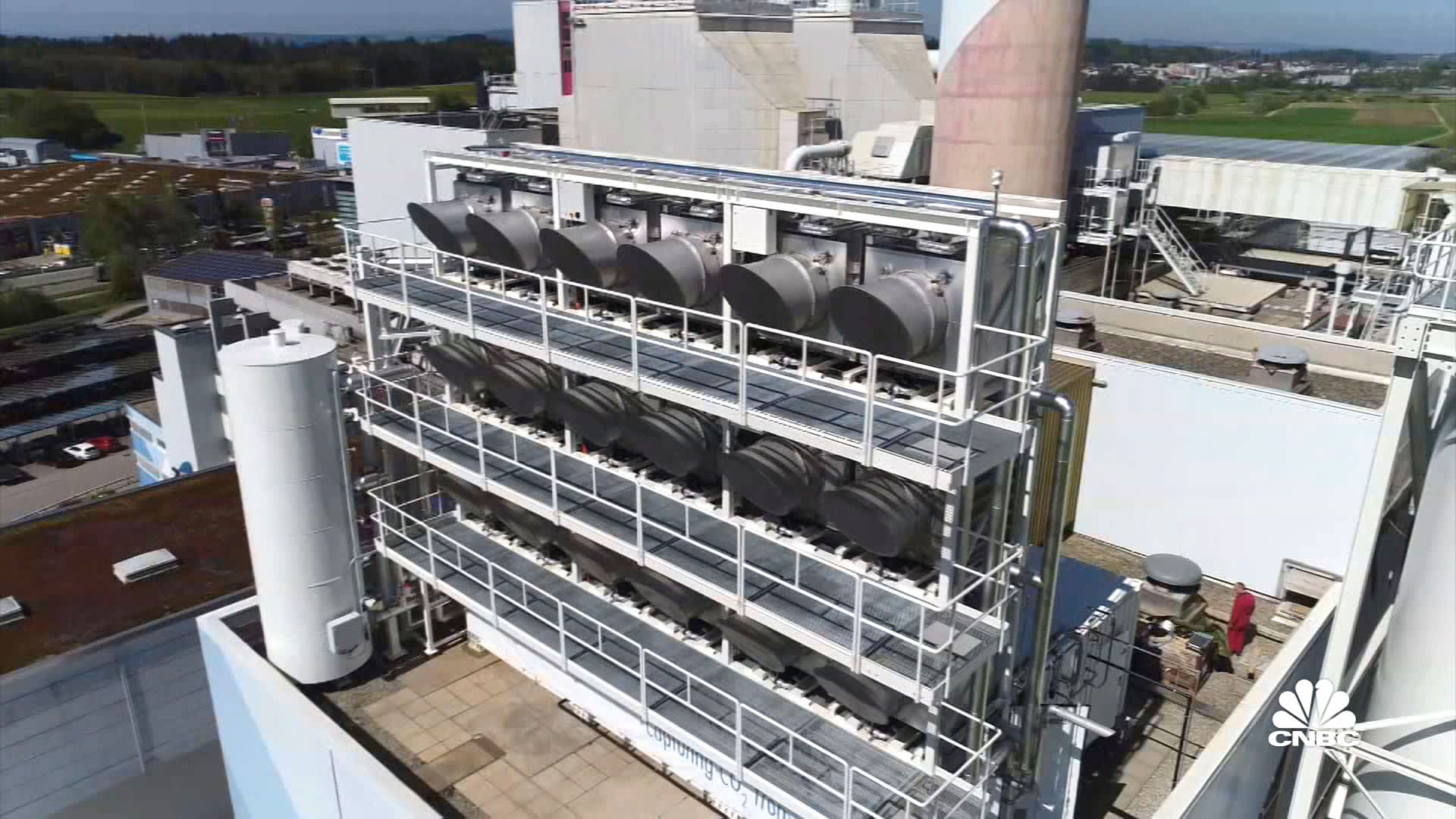
These companies are sucking carbon from the atmosphere

Carbon capture is becoming increasingly popular among investors, and these companies are at the forefront.

Source: These companies are sucking carbon from the atmosphere

I’m currently not completely convinced that these “direct air capture” systems that remove carbon dioxide from the atmosphere are very practical. Technically they can certainly work, but the capital and operating costs are probably substantial, compared to the amount of CO2 you recover. However, if they do become widespread (as the linked article suggests), that will keep a lot of chemical engineers busy. And mechanical and electrical engineers too! And civil engineers during the construction phase.

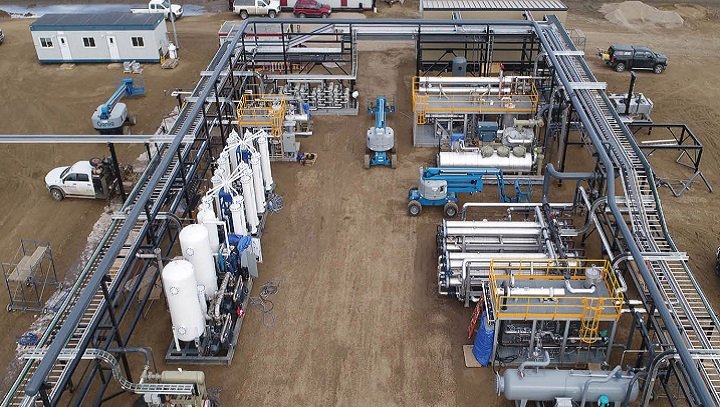
Largest helium facility in Canada opens in Saskatchewan

After writing a recent post about helium supply and demand, this news article came up about a new helium production facility in Canada. I wasn’t aware that it was under construction, but it’s nice to see some Canadian progress in securing supplies of this important resource. The photo shows some typical chemical engineering design elements like piperacks, process vessels, separators, compressors, etc. How to put together a process like this, in a safe, sustainable, and economical way, is one aspect of chemical engineering education.

Saskatchewan is now officially home to the largest helium purification facility in Canada after opening in Battle Creek on Tuesday.

Source: Largest helium facility in Canada opens in Saskatchewan | Globalnews.ca

Chemical Engineering 2021 Student Design Projects

Photo by fauxels on Pexels.com

Each year, final-year students in Canadian engineering programs pursue open-ended group design projects (“capstone design projects”). This gives them the opportunity to combine the knowledge and skills obtained over the previous 3 academic years (plus work term experience for Waterloo students), and to tackle a problem that is a bit more challenging and wide-ranging than what a typical course assignment can cover.

Our Chemical Engineering class of 2021 has finished up their projects, and some short introductory videos are available for viewing. As usual, the projects are student-selected and they cover a wide range of topics from food processing to low carbon energy systems, reusable plastics to automotive parts manufacturing, and biotechnology to metallurgical processes. Allowing students to pick their own project topic let’s them tailor their experience to an area of interest, that perhaps they want to pursue after graduation.

Anyone interested in chemical engineering, or learning about the wide variety of things that chemical engineers can do, should have a look at some of the videos. They are each only about 1 minute long, give a brief high level overview, and can be found at this link.

Pandemic Design – Future Impacts

Source: Pandemic Design –

One interesting topic I come across is “how will our pandemic experience influence technology and design in the coming years“, even after the coronavirus is long gone (preferably) or at least under control? There is a growing awareness that there are things we could be doing better to minimize infection transmission in various commercial and institutional settings, in addition to hospitals where this has been an obvious concern. Even if the coronavirus is completely defeated, reducing the spread of more routine “germs” like colds and influenza or gastrointestinal “bugs” would make good business sense overall, as those account for lost productivity and suffering too. Maybe it’s time we pay more attention to infection prevention in general, beyond just hand washing.

With this interest in mind, I recently agreed to participate on an Advisory Board with a local firm, fabrik architects inc., to provide input on design, materials, and devices that can be used in projects to address the current pandemic and possibly other infection transmission concerns. The Advisory Board members include architects, engineers, and epidemiologists. I look forward to contributing whatever expertise and ideas I have on things like UV disinfection and antimicrobial materials, in what is sometimes called “engineered infection prevention“. It is one way that academics can help to translate current research into new best practices.

Microbiome Engineering

A recent edition of “Chemical Engineering Progress” (a magazine from the American Institute for Chemical Engineers), has an interesting section on “Microbiome Engineering”, as illustrated on the cover. This subject nicely illustrates the diversity of directions that chemical engineers might find in a career path.

A microbiome is essentially a community of various types of microbes that live in an environment. Most of this section discusses the human gut microbiome, those trillions of bacteria that live in our bodies in the digestive tract. Apparently, of all the cells in a human body, about 57% of them are microbial (i.e. bacteria, yeast, etc.), and the rest are human cells.

The microbiome in the gut contains about 3,000 different microbial species. In recent years evidence has been mounting that these microbes play key roles in human nutrition, metabolic diseases (like diabetes), mood disorders, and immune system regulation and disorders. Recent information suggests that people with a poor gut microbiome may be more susceptible to COVID-19 infection and severe complications, for example. There is a lot still to be learned about what constitutes a “good” gut microbiome, and how to manipulate it to improve health.

Of particular interest to chemical engineers is the question of how to manufacture so-called “living biotherapeutic products” (LBPs) that could be implanted or swallowed to modify the gut microbiome and cure diseases. Most pharmaceuticals are either chemicals (single or mixtures) or inactivated (dead) parts of microbes or viruses (as used in vaccines). Producing a living product that can grow and thrive in the gut is a somewhat new challenge, especially if it needs to be a complex mixture of microbes.

Some of these engineering/manufacturing challenges would include issues like:

  • How to shield the manufacturing process and product from oxygen, since many of these gut microbes may be negatively affected by exposure to oxygen (so-called obligate anaerobes).
  • How to get the multiple species of microbes assembled into the LBP. Grow them all separately then mix? Some may grow better in the presence of other species, due to their complex nutritional requirements and symbiotic effects. Growing mixtures of microbes is much more difficult to control if they grow at different rates.
  • How to ensure the final LBP product is consistently the same every time it’s produced. The growth history of microbes can affect their final performance and capabilities, even if they are genetically the same. What we call “process control” in chemical engineering will be crucial to consistency of products.

This area of Living Biotherapeutic Products of quite a new one, although it has certain similarities to existing industrial processes like the production of baker’s yeast or Bifidobacteria for dairy starter cultures. As the medical science evolves and promising new therapeutics are identified, chemical engineers will definitely be involved in translating these developments into manufacturing processes that meet future needs.

The Future of Chemical Engineering

Sometimes I see people getting concerned about future prospects for chemical engineering careers, usually because of some downturn in the oil and gas markets. I guess we should never stop emphasizing that chemical engineering is much more than oil, gas, and petrochemicals! There is also food, pharmaceuticals, alternative energy, environment, safety, consumer products, plastics, minerals, metals, paper & fibers, etc….

Actually, the next 30 years is probably going to be a very exciting and technically challenging time to be a chemical engineer. The world needs people with the innovation skills to handle new materials and energy processes more than ever. Why is that? Here are a few quick thoughts…

Continue reading

Meet The Chemical Engineer Who Accidentally Turned Into An Entrepreneur And Just Raised $36 Million For His App

An interesting story below about an engineer using his observations in water treatment to innovate and improve work-flow for lots of other companies. A chemical engineering education can lead in lots of different directions!

In 2014, freshly graduated UC Berkeley alum Ryan Chan was working as a chemical engineer at a water purification plant, when he realized that the company was constantly facing equipment downtime. The workers used a maintenance program that helped them track all the breakdowns, but there was a big problem with the software they were using that was slowing them down.

“Everything was desktop based, but the maintenance team, the people that were using it, never sat at a desk,” Chan says. 

So Chan realized there had to be a smarter, mobile-first solution for all the blue collar workers across facilities. He wound up teaching himself how to code at night and on weekends, and developed the app while he worked as a chemical engineer, and later as an iOS developer.

In 2016, Chan launched UpKeep, an app developed for facility managers and maintenance workers that allows them to flag things that need repairs and run equipment audits across facilities.

Source: Meet The Chemical Engineer Who Accidentally Turned Into An Entrepreneur And Just Raised $36 Million For His App