Design Projects 2014

Been kind of busy lately, with several active research projects, teaching courses, and admissions stuff of course.  But here is a quick note about our fourth year (capstone) design projects for this year.

All engineering programs have a final year group design project, and this is the time of year when students showcase their results.  For potential applicants to an engineering program, this is very useful to look at, since it can give you a sense of the type of things you might do in a program.  Many of these fourth year projects are also the start of a commercialization effort by the students, so perhaps you’ll see some of these in the news in coming years.

This year, the Faculty of Engineering has made it easy to find out more about these projects, since they have created a one-stop webpage for all the programs.  Have a look through some of the links for programs at that page.  Not all of the programs have detailed project descriptions, but I think we’re working on it for future years.  I think that the Management Engineering program has some of the best descriptions (and very interesting projects too).

Let’s start an informal contest here.  Look through some of the project descriptions, and identify in the comments below which one you think is the “coolest” (if that’s a word people still use).
Early Offers 2014

A revised and updated version of a post from 2013.

We just finished (February 20) processing our first round of offers for applicants who are Ontario high school students, and they have been posted in Quest.  It may take a few more days for OUAC to be updated and emails to go out.  Some of the processes were described in an earlier post, How to Get an Early Offer (which may be a bit outdated for 2014).  But to summarize, we took the data we had at that point and made enough offers to fill up to 1/3 of our available spaces in each program (more specifically, those spaces reserved for Canadians and Permanent Residents).  These are applications where we have enough data and it’s clear that they are competitive, based on previous experience.  We were quite conservative this year, and  gave out fewer offers than in 2013, since we want to leave lots of spaces for a fair competition in the final round in May.  In part, this is because application numbers are up significantly again this year and it’s hard to distinguish fairly between applicants when there are so many with similar grades.  So we think it’s better to hold off until the most complete data is available in late April.  We’ll be processing some non-Ontario applicant offers in the coming weeks.

Some universities give out a lot more earlier offers, but that’s simply because they have a lot less competition for spaces and can just go ahead with whatever they have. Continue reading

Random News

I have various posts in mind, but not much time to write lately.  So here are just some random things that are going on.

  • March Open House:  we’re busy planning for our open house event on Saturday March 1, when applicants and others (like Grade 11 students) can visit, have a look around, and talk to students, staff and faculty.  In previous years we held this on a Tuesday during the Ontario high school March break, but it has become too big (traffic and parking!), so it’s been moved to a Saturday this year.
  • A couple of weeks ago I visited St. John’s NL on research-related business.  I also took the opportunity to meet with a few of our engineering applicants and their parents.  It was nice to meet with people who wouldn’t usually be able to visit us in Waterloo.  I like Newfoundland; beautiful land and nice people.
  • Our new Biomedical Engineering program has had an overwhelming response.  There are over 10 applicants for every available space, so I suspect that it will be our most competitive program for admission this year.
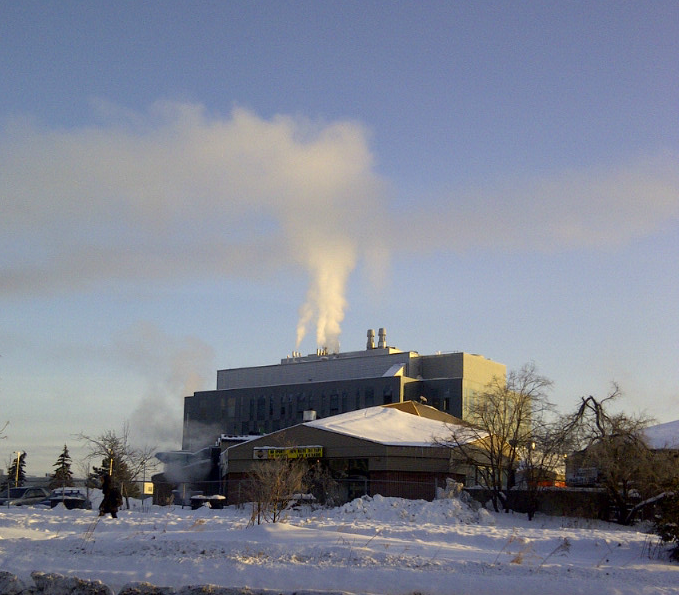
  • Since I teach air pollution control, I’m interested in meteorological phenomena.  So here is a picture of a radiation inversion from the other day.  You can see the vent emissions from our Engineering 6 building rising vertically, then hitting the inversion layer and moving horizontally.  Inversion layers inhibit vertical mixing.  I’ll use this in my lecture next year.

RadiationInversion-cropped

  • Applications to Waterloo engineering are up significantly this year, which is putting a strain on our systems.  We’ll have to ask for people’s patience as we work through all the materials and decision-making processes.  The bulk of our decisions will come out in early May, as usual, even if we have to work 24/7 to do it!
  • We’re currently working on Ontario student (OUAC Form 101) round 1 decisions.  Hopefully we’ll have some decisions going out by the end of this week (although sometimes the process gets hung up and delayed).

My Experience With The Job Hunt

I like these honest and factual posts. In Engineering we try to not “sugar-coat” things. It’s going to be hard, probably the hardest thing most of our admitted students have ever done in their lives so far.

Engineering Girls at University of Waterloo

Marieta’s post, Apply, Interview, Rank, Repeat, is a great post on what the co-op job hunting process is like. Everyone has their own personal experience with the job hunting process though, so I thought I would share what my experience was like with this first co-op term.

Job hunting is stressful, to say the least. While you’re drowning in school work, you’re expected to carry the weight of having to find a co-op job on your back. It’s tough. Reality is, as a first-year student you’re going to run into more challenges with the job hunt than upper-year students. Experience is important and it’s something that comes with time. When I say experience, I’m talking about all sorts of experiences from work experience to experience in your career field. What kind of knowledge do you have in this specific area? How about that area? It is perfectly okay to…

View original post 385 more words

First Impression on My Co-op Term

Another interesting post about personal experiences in our co-op engineering program.

Engineering Girls at University of Waterloo

Man, co-op terms can be amazing.

This is my first co-op term and I am working for General Dynamics Canada in Ottawa as a NATO AGS Software Engineering co-op. Yes, it is a wicked first job. For security reasons, I cannot speak much about what I do other than that I work with military and defense technology, I guess. So far, I haven’t done much work but I’ve learned about my team’s project and what goes on within my company. I’ve had the opportunity to look at the production plant and aircraft component construction so far, but next week I’ll be looking into tanks. How sick is that!? I’m very fortunate to have this opportunity with GD Canada. It’s an incredible start for me, as I do plan on working for the aerospace and national defense industry in the future.

I have to admit though, getting used to a new environment…

View original post 83 more words

1A – COMPLETED

Nice reflections on the shocking transition from high school to university.

Engineering Girls at University of Waterloo

Ah, it’s over. It’s aaalll over.

What a strange feeling it was to have over the holidays. The feeling that you don’t have to do anything. No homework, no assignments, no studying. Just whatever you feel like doing. It honestly felt as though I wasn’t being productive enough and I that I should have gone to review my notes or finish an assignment. Instead I watched movies all day, played a new game that I got, Starbound, and went skating. What a great ending to a fun term. Don’t get me wrong, it was super tough, but in the end it was very satisfying when I finished all of my exams and didn’t have to worry about it anymore.

The first term of university was amazing. Frustrating and stressful at times, but still a really great experience that I do not regret even one bit. You know how as…

View original post 382 more words

Choosing Your Engineering Program 2

With application deadlines approaching, some people will be struggling with the decision of which engineering program to apply to.  I had a post on this topic last year, and here are some additional thoughts.  As a reminder, Waterloo engineering has direct entry to a specific engineering discipline, so you have to pick one of our 13 programs for your application choice.  For those who don’t know where to start, last year I recommended our Quiz for some initial choices, and I still recommend it.  However, it doesn’t currently include our new Biomedical Engineering program, so you have to keep that in mind.

With our quiz results or other ideas in mind, you should do some serious research to see which program catches your interest the best.  There are plenty of online things to look at, and Google or Bing will help you find it.  One that I recently remembered is the U.S. Bureau of Labor Statistics site.  It has some interesting information on the nature of various engineering jobs.  Be careful on putting too much faith in their projections and forecasts however.

Some other ideas:

  • Students at Waterloo will be more engaged with their program and classmates if they are relatively sure and committed to their program.  If after doing some serious research and thought about different programs you still can’t decide at all, then certainly consider a university with a general engineering entrance program.  Then you can postpone deciding for a little while.  There are lots around Ontario, including Queen’s, McMaster, and Western, for example.  Other universities offer direct entry as well as an undecided/undeclared option, including Ryerson, Guelph, Windsor and York, for example.  Toronto has the “TrackOne” program which is a general first year.  Toronto’s Engineering Science is sort of a general first year too, since it looks like about 33% of the students move into other disciplines in 2nd year.
  • In spite of what I say in the above point, you don’t have to be 100% sure about your choice.  It’s normal to be somewhat uncertain.  But you should have some level of comfort and knowledge about the program you’ve picked, and why you are picking it.
  • There are potentially bad reasons to pick a program, including:  1) it’s the most competitive for admission; 2) family/friends say it’s the “best”; 3) some website says it’s the best paid, or has the best career prospects.  These are bad reasons, especially if your interests and aptitude don’t align with the choice.  Imagine sitting in classes where everyone else is keen on the material and projects,  and you’re not.  It’s probably not going to go well.  Every year we get a few of these cases.  Sometimes we can help them switch programs, but sometimes it goes so badly that they have to leave the university.  We would prefer to avoid this problem as much as possible.
  • Always remember that career paths can be very flexible, and choosing a specific discipline does not lock you into a specific career for the rest of your life.  Many engineering graduates eventually go into management careers, where the discipline-specific technical knowledge is less important anyways.
  • There is a lot of overlap between various disciplines, so it is not critical that you pick the “right” one.  If you pick one that you feel some affinity for, you’ll probably be fine no matter how your interests may shift over the coming years.  You should expect (and want) to continue learning new things throughout your career.
  • There is no such thing as the “best” program.


Engineering Most Popular Degree Among Millionaires

Here is an interesting article.  If you follow the link at the bottom for the rest of the article, it goes on to say that most engineering millionaires made their fortunes as entrepreneurs. 

Engineering Most Popular Degree Among Millionaires

Posted on November 18, 2013 by admin

by Marc Howefrom Sourceable 14th November 2013

A new survey has found that an engineering background produces more millionaires than any other form of tertiary instruction.

The survey, conducted by wealth management publication Spear’s and consulting firm WealthInsight, found that engineering was the most popular degree amongst the world’s millionaires, beating out even MBAs and computer science and finance degrees.

MBAs came in second after engineering, with economics, law and business administration degrees rounding out the top five. While engineering was at the top of the list, the only other STEM subject represented in the top 10 was computer science, logging in at number eight.

Other disciplines common among the world’s millionaires included commerce, accounting, politics and finance.

via Engineering Most Popular Degree Among Millionaires – Australia Wide Personnel.