It’s hard to believe, but we are pretty much done with the 2016 admission cycle and are starting to gear up for 2017. I’ve been quite busy over the last few months with research and academic matters (and admissions of course, although this is actually only a small piece of what I do). As one example, we recently organized and held our 3rd annual Resource Recovery Partnership Workshop for researchers, industry, and government people interested in solid waste management, recycling issues, and energy from waste opportunities.
As far as engineering admissions for 2016 went, here are a few potentially interesting observations:
- We met (or exceeded!) our targets for all the spaces in our programs. There were very few offers available to be made from our waitlist, about 6 if I recall correctly.
- Most of our programs are packed to capacity for September. We’re not able to offer any switches into programs like Software, Computer, Electrical, Mechanical, Mechatronics, Biomedical, or Systems Design. This is why it’s so important for applicants to carefully consider what they want, and not rely on possibly changing programs later. In many cases this will not be feasible.
- About 1 in 3 Canadian applicants received an offer. About 1 in 5 visa student applicants were successful (it’s more competitive since there are fewer spaces available).
- This year there will be over 500 females in the entering class, about 30% of the total, which is a new record high over the past couple of decades. By program, some are around 45 to 65% female (Biomedical, Chemical, Environmental, Management, Systems Design), others are around 25 to 30% female (Civil, Electrical, Geological, Mechanical, Nanotechnology), and the rest are about 20% (Computer, Mechatronics, Software). A big increase this year was in Mechanical, which has historically been in the 20% or less range, but Computer, Electrical and Software all saw increases too. Just to confirm, we don’t have affirmative action or preferential admissions for females. This is just the result of a decade or more of programs to encourage young women to consider study and careers in the STEM fields, and it seems to be working.
For those interested in 2017 admissions, there will be a few changes and new initiatives, and I will attempt to describe these over the coming months.
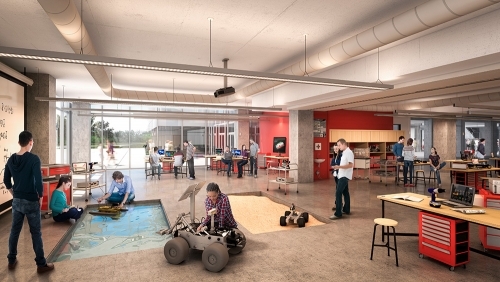
 A Professor in Waterloo Engineering